
GLP-1 Growth Is Reshaping the Economics of the World’s Leading Medicines
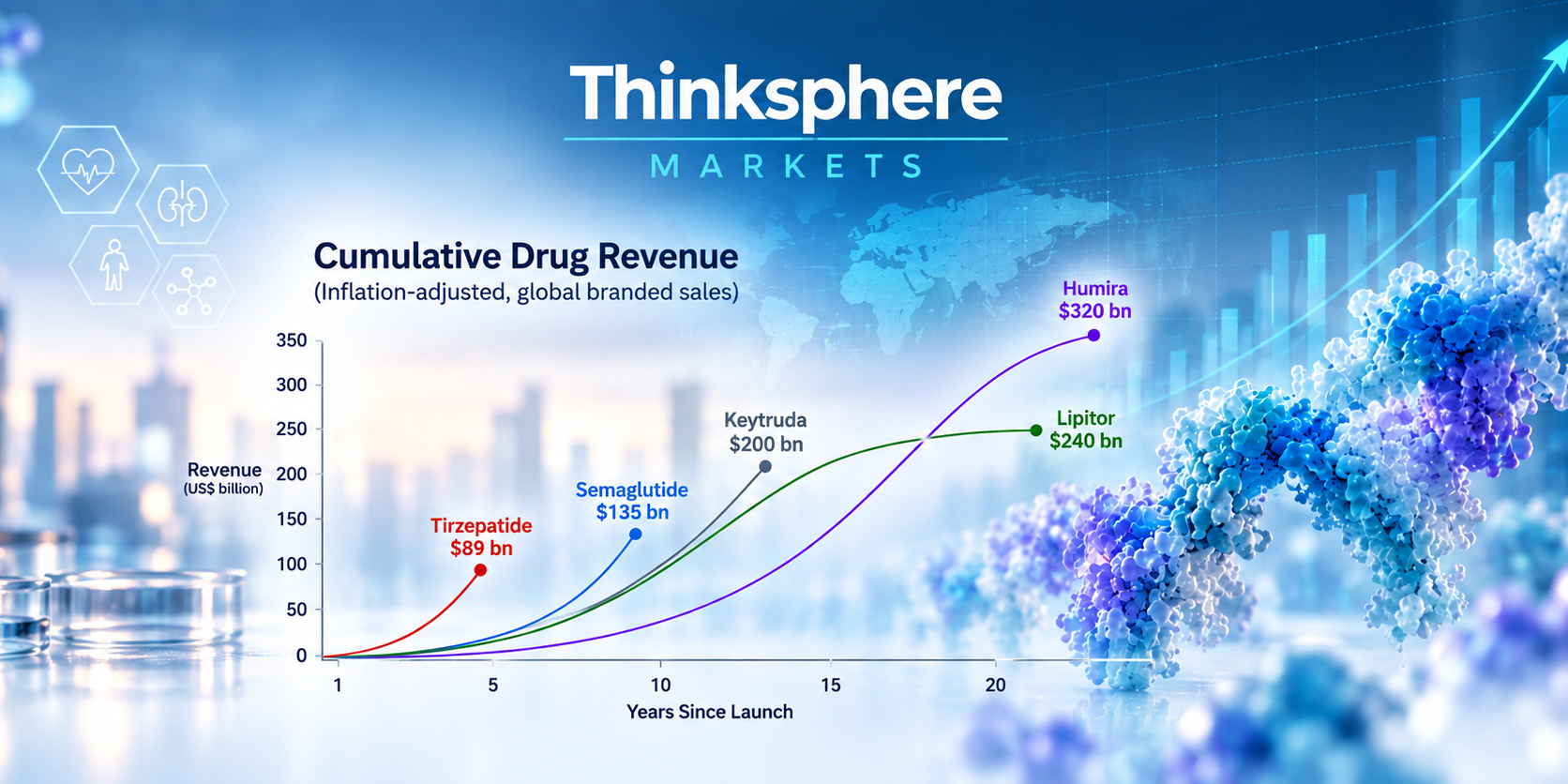
The extraordinary commercial growth of GLP-1 medicines is beginning to redefine what a pharmaceutical high-revenue medicine can look like. Historically, the world’s largest-selling medicines built their revenues over long periods. Humira, for example, generated an estimated $320 billion in cumulative inflation-adjusted revenue over approximately 23 years, while Lipitor reached an estimated $240 billion.
The trajectory of newer incretin-based medicines looks markedly different. As illustrated in the accompanying analysis, cumulative inflation-adjusted revenue associated with tirzepatide has risen to approximately $89 billion within only four years of launch, while semaglutide has reached approximately $135 billion over a longer period.
Recent reported sales underline the continuing strength of demand. Eli Lilly reported combined Mounjaro and Zepbound revenue of approximately $14.9 billion in Q2 2026 alone, compared with approximately $8.6 billion during the same quarter of 2025.
A different blockbuster trajectory
Traditional leading medicines have typically required several years to establish large patient populations and reach peak commercial scale.
The current obesity and metabolic therapeutics market is developing considerably faster, driven by strong patient demand, expanding access and indications, and substantial investment from pharmaceutical companies. However, the rapid growth of the overall market does not necessarily mean that today’s leading individual products will ultimately surpass the lifetime revenues of medicines such as Humira.
Competition within obesity therapeutics is intensifying rapidly. Existing GLP-1 medicines are increasingly being joined by oral therapies, next-generation incretins and drugs targeting alternative metabolic mechanisms. Lilly is also progressing next-generation candidates including retatrutide, for which the company reported completion of the Phase III clinical data package supporting planned global obesity registrations. Eli Lilly and Company
At the same time, competition between major pharmaceutical companies continues to increase, with the global obesity market attracting significant investment in differentiated mechanisms, combinations, delivery formats and approaches designed to improve efficacy, tolerability and long-term weight management.
From individual medicines to a blockbuster therapeutic class?
This could ultimately change how the commercial opportunity is distributed.
Rather than one obesity medicine maintaining dominance for decades, future revenues may increasingly be divided across a broader portfolio of therapies addressing different patient populations, mechanisms and treatment preferences.
Patent expirations and subsequent generic competition will add another dimension. The timing will vary significantly by product, formulation and geography, meaning that the arrival of generic semaglutide will not occur simultaneously across global markets. Research into GLP-1 patent portfolios also highlights the complexity created by patents covering active ingredients, formulations and delivery devices. PubMed Central (PMC)
The bigger story, therefore, may not be whether tirzepatide, semaglutide or another individual medicine eventually becomes the world’s highest-grossing drug.
It may be the scale of the therapeutic category itself. With significant pipelines emerging across obesity, diabetes, cardiovascular and broader cardiometabolic disease, GLP-1 and next-generation metabolic therapeutics have the potential to create one of the largest pharmaceutical markets ever established.
For drug developers, investors and technology partners, attention is consequently shifting beyond today’s market leaders towards the next generation of mechanisms, combinations and enabling technologies that could shape the cardiometabolic landscape over the coming decade.
Reference
Source: Analysis based on company reports and SEC filings. Figures are inflation-adjusted estimates.