
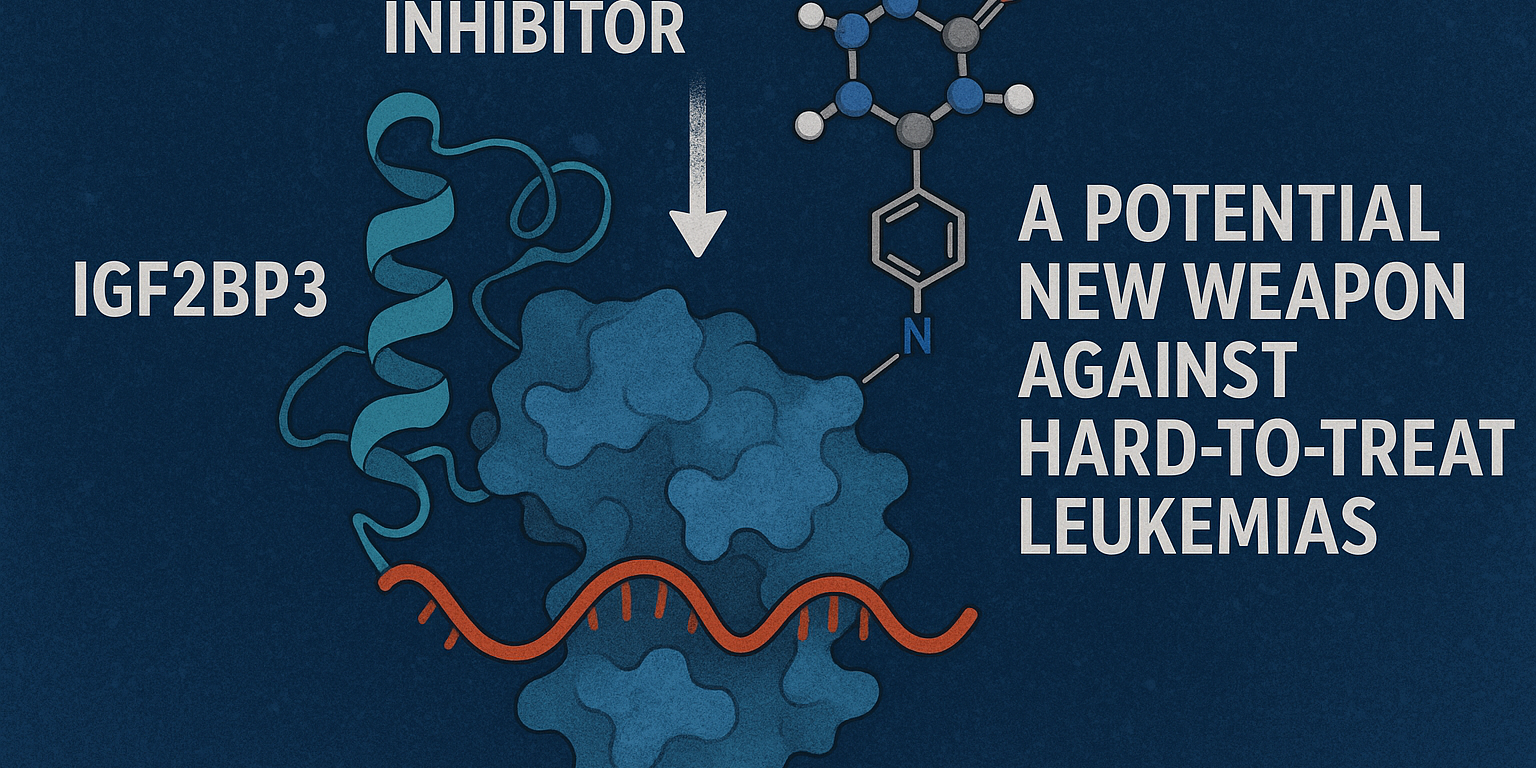
Small-Molecule Inhibitor of RNA-Binding Protein IGF2BP3 — a Potential New Weapon Against Hard-to-Treat Leukaemias
Researchers have recently identified a small-molecule inhibitor of the RNA-binding protein IGF2BP3 that shows potent anti-leukemic activity — a breakthrough that may pave the way for new treatments against leukaemias and other difficult-to-target cancers.
Background — Why IGF2BP3 Matters
IGF2BP3 is an “oncofetal” RNA-binding protein: normally active during early development, but largely silent in healthy adult tissues. In certain cancers — including aggressive leukaemias — IGF2BP3 becomes reactivated, where it binds and stabilises RNA.
Because IGF2BP3 lacks typical enzymatic “pockets” that conventional drugs target, it has long been considered “undruggable.” This has left a significant therapeutic gap for cancers driven by RNA-binding proteins rather than classic kinase or enzyme targets.
The Discovery — A Small Molecule that Disrupts RNA Binding
A high-throughput biochemical screen of ~200,000 compounds, followed by cell-based counter screens, identified a lead compound, I3IN-002. This molecule appears to block IGF2BP3’s binding to target RNAs and potently suppresses the growth of leukaemia cell lines.
In treated leukaemia cells with IGF2BP3 dependence, I3IN-002 induced altered cell-cycle dynamics and increased apoptosis — a strong indication that it interferes with the essential oncogenic function of IGF2BP3.
Moreover, in vivo experiments in mice showed that I3IN-002 was tolerated when administered intraperitoneally and displayed potent anti-leukemic activity in a transplantation model of MLL-AF4 leukaemia.
Biophysical assays — including cellular thermal shift assays and drug-affinity responsive target stability assays — support that the compound acts “on target,” i.e. it binds IGF2BP3 and disrupts its interaction with RNA in cells.
Why This Could Matter — Expanding the Druggable Landscape
Targeting “Undruggable” Proteins: IGF2BP3 belongs to a class of cancer-relevant proteins (RNA-binding proteins) that historically lacked small-molecule inhibitors. I3IN-002 demonstrates that these proteins can, in fact, be drugged.
Precision Against Cancer-Specific Targets: Because IGF2BP3 is largely silent in normal adult tissues but is reactivated in cancers, inhibitors may spare normal cells and reduce off-target toxicity.
New Therapeutic Classes for Hard-to-Treat Cancers: For leukaemias (and possibly other IGF2BP3-positive cancers) with poor prognosis or limited existing therapies, small-molecule inhibitors like I3IN-002 may offer a new, previously unavailable treatment option.
Challenges & Next Steps
From Preclinical to Clinical: Although results in cell lines and mice are promising, extensive work remains to confirm safety, bioavailability, pharmacokinetics, and efficacy in humans.
Off-Target Effects and Selectivity: While on-target activity has been shown, full profiling in physiological conditions is needed to ensure specificity and rule out unintended interactions.
Broader Applicability: It remains to be determined which cancer subtypes (beyond the models studied) depend on IGF2BP3, and whether inhibitor treatment will be effective across that spectrum.
Resistance & Delivery: As with any small-molecule therapy, cancer cells may evolve resistance; efficient delivery to bone marrow (in leukaemia) or solid-tumour sites (if applicable) must also be addressed.
Conclusion
The discovery of I3IN-002 — a small-molecule inhibitor of IGF2BP3 — represents a significant step toward expanding the repertoire of druggable cancer targets. By showing that an RNA-binding protein once deemed “undruggable” can be pharmacologically inhibited with anti-cancer effects, this work opens a promising new frontier in cancer drug development. If successfully translated into the clinic, this approach could bring hope to patients with leukemias and other difficult-to-treat cancers reliant on RNA-binding oncoproteins.
Reference
Jaiswal AK, Scherer GM, Thaxton ML, Sorrentino JP, Yuen C, Mehta MM, Sharma G, Lin TL, Tran TM, Cohen A, Ritter AJ, Kotecha RS, Sanford JR, Damoiseaux RD, Garg NK, Rao DS. A small molecule inhibitor of RNA-binding protein IGF2BP3 shows anti-leukemic activity. Haematologica. Early view; 2025. DOI: https://doi.org/10.3324/haematol.2025.288221