
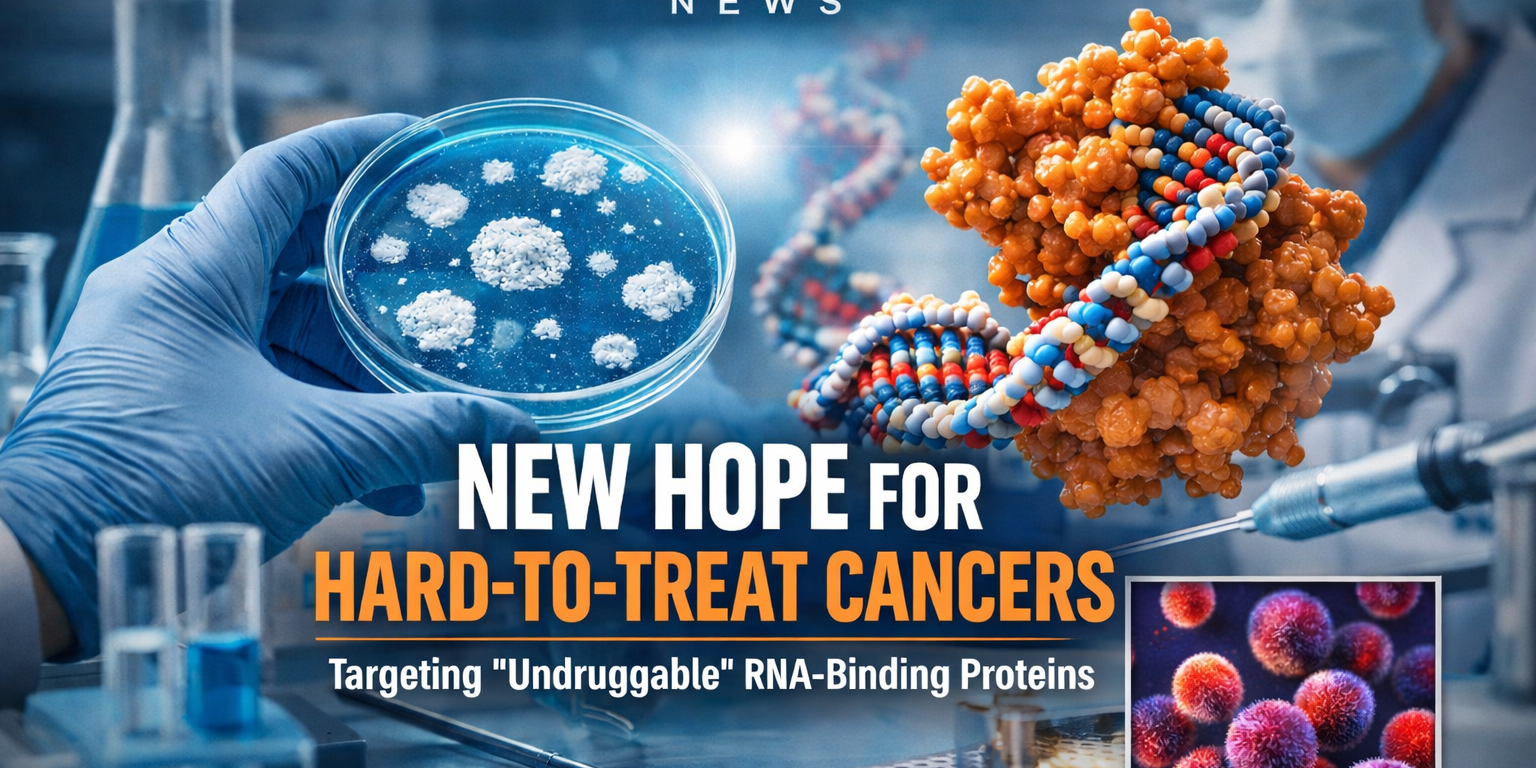
Breakthrough in Small-Molecule Discovery Targets “Undruggable” Cancers
A research team at UCLA Health Jonsson Comprehensive Cancer Center has identified a novel small molecule that could unlock an entirely new class of cancer treatments—particularly for malignancies long considered difficult or impossible to treat.
The newly discovered compound targets IGF2BP3, an RNA-binding protein that plays a key role in driving cancer growth. While this protein is normally active only during early development, it becomes reactivated in several aggressive cancers, including leukemia, brain tumors, sarcomas, and breast cancer.
Why This Matters
RNA-binding proteins like IGF2BP3 have historically been labeled “undruggable” because they lack the deep binding pockets typically required for conventional small-molecule drugs. This has left a significant gap in therapeutic options for patients whose cancers rely on these mechanisms.
The UCLA team overcame this barrier by developing a high-throughput screening platform that evaluated nearly 200,000 chemical compounds. From this effort, they identified a promising molecule—called I3IN-002—that disrupts IGF2BP3’s interaction with cancer-promoting RNA.
Early Results Show Promise
In laboratory studies, I3IN-002 selectively slowed the growth of leukemia cells that depend on IGF2BP3 while sparing healthy cells. The compound also reduced expression of genes that fuel tumor progression and demonstrated anti-leukemia activity in early mouse models.
Although further optimization is needed before clinical trials, the findings provide the first strong proof that RNA-binding cancer drivers can be directly targeted with small molecules.
Bigger Picture
This discovery could open the door to therapies aimed at a wide range of cancers previously resistant to treatment. More broadly, it signals a shift in drug discovery—expanding the landscape of viable targets beyond enzymes and receptors to include RNA-regulatory proteins.
As researchers refine these molecules, the approach could complement existing targeted therapies and immunotherapies, offering new hope for patients with aggressive, treatment-resistant cancers.
Reference
Small molecule discovery could open the door to new class of treatments for hard-to-treat cancers, News-Medical, Dec 9, 2025.
https://www.news-medical.net/news/20251209/Small-molecule-discovery-could-open-the-door-to-new-class-of-treatments-for-hard-to-treat-cancers.aspx